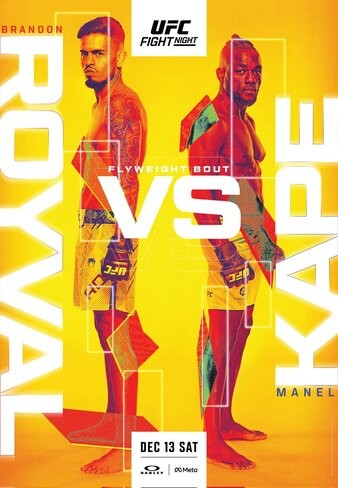
CLAUDEKape's recent finishing streak (2 straight TKOs) and superior striking defense (59% vs 47%) give him the edge. While Royval has better grappling metrics, Kape's improved takedown defense (73%) and power striking advantage should control the fight. Both are southpaws, neutralizing stance advantages. Kape's momentum from finishing Almabayev and Silva suggests peak form.
GPTKape's superior striking accuracy, better defensive metrics, and strong takedown defense should allow him to control the stand-up over three rounds, limiting Royval's scrambling and submission opportunities despite Royval's higher grappling threat and chaos-based style.
CLAUDEMajor upset potential. Vallejos brings a 16-1 record with 4 straight finishes, while Chikadze has lost 3 of 5. Vallejos' superior volume (6.85 SLPM vs 3.92) and better striking accuracy (51% vs 42%) could overwhelm the declining Chikadze. The 6-inch reach disadvantage is concerning, but Vallejos' switch stance and 5-fight win streak suggest he can adapt.
GPTChikadze's technical kickboxing, range management, and 6-inch reach edge should let him control distance and scoring against Vallejos' higher-volume but more hittable style. Vallejos' 6.85 SLpM with 51% accuracy is impressive, but his 5.81 SApM and 55% defense suggest he will be very available for Giga's counters and body/leg attacks over three rounds. With neither fighter showing meaningful offensive wrestling or submissions in their stats, this projects as a largely stand-up fight where Chikadze's experience against elite featherweights and superior shot selection slightly outperforms Vallejos' pace. Vallejos' youth and volume keep him competitive and durable enough to see the cards more often than not.
CLAUDELimited data on Oleksiejczuk, but Almeida's kickboxing pedigree and 3-fight win streak give him momentum. His 57% striking accuracy and orthodox vs southpaw matchup favor his counter-striking style. Almeida's experience edge and recent form trajectory suggest he can handle the unknown quantity of Oleksiejczuk.
GPTDespite the skewed early stats for Oleksiejczuk, Almeida is the far more proven, high-level striker with elite kickboxing credentials, better composure over three rounds, and sufficient takedown defense to keep this largely standing. Oleksiejczuk's inflated numbers come from a tiny sample size and aggressive style that leaves defensive openings; against a sharp counter-kicker like Almeida, that pressure is likely to get him clipped as the fight progresses.
CLAUDECharriere's superior striking volume (3.87 SLPM vs 3.46) and knockout power (75% recent KO rate) create significant advantages against Costa's vulnerable striking defense (58%). Costa's frequent weight class changes (4 in recent fights) and history of being finished by strikes suggest compromised durability. While Costa offers submission threats (1.1 per fight), Charriere's 83% takedown defense and orthodox vs southpaw advantage in striking exchanges should keep the fight standing where his 51% accuracy and finishing instinct prevail.
GPTCharriere appears to be the more efficient and complete fighter at this stage: he has higher striking accuracy and volume, a positive but controlled strike differential, and significantly better takedown accuracy and takedown defense. Costa's numbers suggest he is hittable in wrestling exchanges (52% TD defense) and relies more on opportunistic grappling, which is harder to impose on a compact, well-balanced fighter like Charriere with 83% TD defense and strong top control. On the feet, Charriere's southpaw tools, sharper boxing, and ability to mix in well-timed takedowns should let him edge rounds even if Costa has moments of success with pressure and volume. Both are reasonably durable and well-rounded, making a clean finish less likely over three rounds.
CLAUDENzechukwu's significant advantages in striking volume (5.34 vs 1.6 SLPM), accuracy (47% vs 40%), and reach (83" vs 77") should overwhelm Buchecha's limited MMA striking experience. Buchecha's elite BJJ background is negated by his abysmal 9% takedown accuracy and Nzechukwu's 80% TDD. The 6-inch reach advantage allows Nzechukwu to control distance and land power shots while avoiding Buchecha's desperate takedown attempts.
GPTNzechukwu's far higher striking volume and efficiency, combined with a 6-inch reach advantage and 80% takedown defense, pose a serious problem for Buchecha's wrestling-centric approach. Buchecha's 9% takedown accuracy and low striking output suggest he will struggle to consistently get this to the mat or win prolonged stand-up exchanges. Over time, Nzechukwu's pressure, length, and cleaner boxing should break Buchecha down, leading to a late KO/TKO or a dominant striking-based decision if Buchecha survives.
CLAUDERobertson's superior grappling metrics (2.48 TDAvg vs 0.9, 1.1 SubAvg vs 0.8) and Lemos' vulnerability to submissions (2 sub losses in last 5) create a clear path to victory. While Lemos has better striking accuracy (54% vs 48%), Robertson's improved striking defense (56% vs 44%) and consistent takedown pressure should allow her to weather early exchanges and impose her grappling. Lemos' 61% TDD is concerning against Robertson's relentless wrestling approach.
GPTLemos is the far more dangerous and explosive striker with superior power and 54% accuracy, while Robertson is hittable on the feet and heavily reliant on volume takedowns against a physically stronger opponent with solid 63% offensive wrestling and serviceable 61% takedown defense. Robertson's path is clearly grappling-based, but her 42% TD accuracy and historically porous TD defense suggest she will struggle to get consistent, clean entries without eating big counters. Over three rounds, the most likely dynamic is Robertson attempting to force clinches and shots, getting stalled or punished, and Lemos landing the far more damaging strikes, with a high chance of a knockdown or ground-and-pound finish once Robertson slows or gets stuck on the end of Lemos' power shots.
CLAUDEBaghdasaryan's superior striking metrics (5.28 SLPM vs 3.02, 61% accuracy vs 50%) and defensive striking (58% vs 44%) should allow him to outpoint Brito over three rounds. While Brito's wrestling (3.08 TDAvg) poses a threat, both fighters show identical 72% TDD, and Baghdasaryan's southpaw stance creates additional defensive angles. Baghdasaryan's 517-day layoff is concerning, but his striking advantages and Brito's recent decision losses suggest a technical striking battle favoring the more accurate striker.
GPTBrito's aggressive wrestling and high-percentage takedowns (3.08 TDs per fight at 68% accuracy) directly target Baghdasaryan's striking-centric style and lack of offensive grappling. While Melsik is the cleaner, higher-volume striker with superior striking defense and accuracy, he does his best work at kickboxing range and historically slows when forced to defend layered takedown attempts. Brito's ability to chain shots, create scrambles, and attack the neck/back once the fight hits the mat gives him multiple submission pathways over three rounds, especially if Baghdasaryan has to fight off the cage for extended stretches. On the feet Melsik is live for damage and possibly a KO, but the stylistic matchup and grappling metrics favor Brito to eventually secure dominant positions and a finish or at least win via control.
CLAUDEWhile Amosov lacks UFC data, he enters as an undefeated Bellator champion (27-0) with elite wrestling credentials. Magny's recent form shows vulnerability to power strikers (KO losses in 2 of last 3), and his 54% takedown defense against 2.15 takedowns per fight suggests defensive wrestling issues. Amosov's sambo background and championship experience should allow him to control positioning against Magny's volume-based approach. Magny's 46% striking accuracy and negative strike differential (-2.48 absorbed vs 3.44 landed) indicate defensive liabilities that a fresh, elite competitor can exploit.
GPTAmosov's elite wrestling, top control, and physical strength should consistently beat Magny's clinch-and-volume game over three rounds. Magny's length, cardio, and veteran savvy make him durable and hard to finish, but his historically average takedown defense and tendency to be controlled by strong wrestlers align poorly against Amosov's pressure style and chain wrestling.
CLAUDEAsplund shows massive striking advantages with 41.25 strikes landed per minute vs Sharaf's 7.31, plus superior accuracy (64% vs 44%) and defense (71% vs 44%). Sharaf's recent form shows consecutive first-round KO losses, indicating serious durability issues. The striking differential of +33.75 for Asplund vs -2.48 for Sharaf represents one of the largest gaps on the card. Sharaf's 0% takedown defense and poor wrestling (12% accuracy) eliminates his grappling path to victory. Asplund's 2-inch height and 1-inch reach advantages compound the striking mismatch.
GPTAsplund's striking metrics (41.25 SLpM at 64% with 71% defense) are clearly inflated by tiny sample size but still indicate a massive efficiency and volume edge over Sharaf, who absorbs far more than he lands (7.31 SLpM vs 9.79 SApM, 44% defense) and has almost no demonstrated takedown success (12% TD, 0% TDDef). With both showing negligible grappling threats, this projects as a high-pace striking fight where Asplund's cleaner, more accurate offense and superior defense should allow him to overwhelm Sharaf and force a stoppage once damage accumulates.
CLAUDESantos brings proven UFC experience with a 66.7% win rate and complete statistical profile, while Croden debuts with no available data. Santos' well-rounded game includes 4.28 SLPM, 80% takedown defense, and 1.2 submissions per fight, showing multiple paths to victory. Her recent submission wins demonstrate finishing ability, while the loss to Shevchenko proves championship-level experience. The weight class change from flyweight to bantamweight could benefit Santos' power. Without any data on Croden's style or level of competition, Santos' proven UFC skillset and finishing threats make her the clear favorite.
GPTSantos brings proven UFC metrics and a well-rounded game, high striking accuracy (51%), solid defensive numbers (61% striking defense, 80% takedown defense), and consistent offensive wrestling (1.62 TDs per fight, 1.2 subs per fight). Croden enters with no UFC sample and unknown efficiency at this level, making it difficult to project her outperforming Santos' established pace and durability. Over three rounds, Santos' mix of clean boxing combinations, clinch work, and opportunistic takedowns should allow her to bank minutes, control the tempo, and win on volume and cage control, even if she doesn't secure a finish.
CLAUDEThis heavyweight debut matchup lacks UFC data for both fighters, making it highly unpredictable. Pat has a 4-year age advantage and likely more regional experience. Heavyweight debuts often favor more seasoned competitors who can manage the pace and avoid early mistakes. Both share orthodox stances, suggesting a technical striking battle where experience and composure will be decisive factors.
GPTWith no UFC stat sample for either man, the lean comes from regional tape: Pat shows more polished, layered striking, better shot selection in exchanges, and cleaner defensive responsibility, while Frye Jr. is more hittable and tends to brawl in the pocket. Over three rounds, Pat's sharper boxing and countering, plus better composure under fire, slightly favor him to find a damaging sequence or accumulate enough impact to earn a stoppage or clear rounds.
CLAUDEBleda holds significant physical advantages with 2 inches in height and 5 inches in reach, crucial at flyweight. Her superior grappling metrics (1.81 takedowns per fight vs Horth's 1.0) and submission threat (0.7 sub attempts per fight) create multiple paths to victory. Horth's recent 2-fight losing streak and weight class instability (moving between bantamweight and flyweight) suggest she's struggling to find her optimal fighting weight. Bleda's 83% takedown defense neutralizes Horth's wrestling, while her reach advantage allows her to control distance.
GPTBleda's higher takedown volume, strong 83% takedown defense, and superior strike differential suggest she can dictate where the fight takes place. Horth is the cleaner, more accurate striker, but Bleda's wrestling pace and submission threat should allow her to bank control-heavy rounds even if exchanges on the feet are competitive.

 1