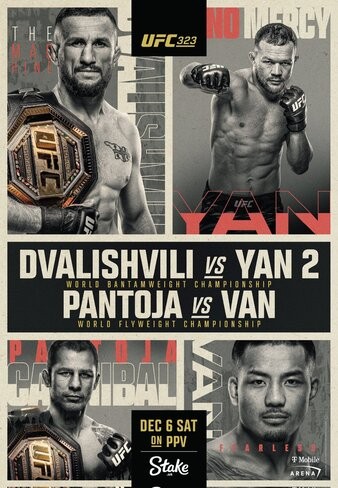
CLAUDEThis rematch heavily favors Dvalishvili based on their first encounter and recent trajectories. Merab's relentless pace (5.84 takedowns per fight) and cardio advantage proved decisive in their 2023 meeting. Since then, Dvalishvili has defeated elite competition including O'Malley twice and Nurmagomedov, while Yan has struggled in close decisions. Merab's 82% takedown defense neutralizes Yan's wrestling, forcing a striking battle where his volume (4.31 SLPM) and pressure overwhelm Yan's technical precision.
GPTDvalishvili's elite cardio, relentless takedown attempts, and superior defensive metrics give him a stylistic edge. While Yan is the more accurate and high-volume striker, Dvalishvili's pace and wrestling historically neutralize Yan's offense, as seen in their prior matchup and against common opponents. Yan's strong takedown defense will make this close, but Dvalishvili's output and control should sway the judges.
CLAUDEPantoja's championship experience and submission prowess (0.8 subs per fight) present a massive challenge for the rising Van. While Van boasts impressive volume (8.39 SLPM), his 83% takedown defense hasn't been tested by an elite grappler like Pantoja. The champion's recent submission victories over Kara-France and Asakura demonstrate his ability to find the neck against aggressive strikers. Van's aggressive style and 58% striking defense leave openings for Pantoja's level changes and scrambles.
GPTPantoja's championship-level experience, grappling control, and proven durability give him the edge over Van's high-volume striking, especially over five rounds. While Van is the more active striker and has better defensive stats, Pantoja's ability to mix in takedowns and threaten with submissions is likely to nullify Van's offense and control the pace of the fight.
CLAUDETaira's grappling heavy approach (2.73 takedowns, 1.6 submissions per fight) exploits Moreno's declining form and defensive vulnerabilities. Moreno has lost 3 of his last 5, showing decreased durability and wrestling defense (63% TDD). Taira's superior striking accuracy (60% vs 44%) and submission threat create a dual-threat attack. While both lost to Royval, Taira showed better defensive metrics and is 7 years younger with significant upside. The weight cut history shows Taira's consistency at flyweight while Moreno has struggled.
GPTMoreno's superior defensive metrics, higher striking volume, and proven experience against elite competition give him an edge over the less-tested Taira. Although Taira is a more dangerous submission threat, Moreno's 63% takedown defense and strong scrambling ability should limit Taira's grappling success over three rounds.
CLAUDETalbott's significant physical advantages (6-inch height, 6-inch reach) combined with his explosive striking volume (8.38 SLPM vs Cejudo's 3.77) create a challenging matchup for the aging former champion. Cejudo's recent 1-3 skid against top competition, including decision losses to Song and Dvalishvili, indicates declining speed and timing. Talbott's 55% striking accuracy and switch stance versatility will exploit Cejudo's orthodox predictability. While Cejudo's wrestling pedigree remains dangerous, his 32% takedown accuracy and Talbott's 90% takedown defense neutralize this path. Talbott's youth (26 vs 37) and 4-fight UFC win streak suggest he'll overwhelm Cejudo with pace and volume.
GPTTalbott's extremely high striking output (8.38 SLpM) and 55% accuracy pose a major threat to the aging Cejudo, whose striking defense (60%) and volume are solid but lag behind Talbott's pace. Cejudo's wrestling edge is challenged by Talbott's 90% takedown defense, making it difficult for Cejudo to reliably control or ground Talbott. Talbott's youth, durability, and offensive volume should allow him to outpoint Cejudo over three rounds, barring a significant wrestling breakthrough.
CLAUDEBlachowicz's veteran experience and superior grappling create a clear path to victory. While Guskov shows promise with recent KO wins, his 18-3 record comes largely from regional competition. Blachowicz's 2-inch reach advantage, proven UFC durability, and 50% takedown accuracy against Guskov's 66% takedown defense suggests he can mix striking with wrestling to control the fight. Guskov's striking defense (47%) is concerning against a former champion who lands 3.41 strikes per minute.
GPTBlachowicz holds key statistical advantages in both striking defense and grappling. His striking differential (+0.5) is superior to Guskov's (-0.57), and he maintains higher accuracy (50% vs 48%) and better defensive efficiency (53% vs 47%). Blachowicz's takedown ability and 68% takedown defense further expand his paths to victory against a fighter who has shown no grappling threat. Guskov's higher strikes absorbed per minute (3.7) leaves him vulnerable over three rounds.
CLAUDEDawson's wrestling-heavy approach (3.65 takedowns per fight) should neutralize Torres' dangerous striking (7.17 strikes per minute). Torres' recent TKO win over Drew Dober shows his power, but his 52% striking defense and vulnerability to grapplers (lost via submission to unranked opponent) plays into Dawson's strengths. Dawson's 92.8% win rate and 4-fight win streak demonstrate consistency, while Torres' 2-2 UFC record shows inconsistency at the elite level.
GPTTorres holds a significant edge in striking volume, accuracy, and striking differential, while also boasting elite takedown defense (88%) that could neutralize Dawson's primary grappling path. Dawson's grappling and submission skills are strong, but Torres' offensive output and defensive metrics suggest he can keep the fight standing and overwhelm Dawson, whose striking defense is below average.
CLAUDEDuncan's momentum (4-1 last 5 fights) and superior grappling efficiency make him the pick despite McKinney's explosiveness. McKinney's 50% win rate and recent knockout losses show defensive vulnerabilities, while Duncan's 80% win rate demonstrates consistency. Duncan's recent submission wins and McKinney's submission loss to Ismael Bonfim suggest a grappling path to victory. McKinney's aggressive style (4.53 strikes per minute) often leaves him exposed to counters and takedowns.
GPTMcKinney holds a clear grappling and submission threat advantage, with a much higher takedown defense (85% vs 33%) and a greater submission average (1.0 vs 0.3). While both have similar striking output and accuracy, Duncan absorbs more strikes (SApM 4.0 vs 2.63) and is vulnerable to being taken down. McKinney's ability to mix in takedowns and capitalize on Duncan's poor takedown defense is likely to open up submission opportunities early.
CLAUDESilva's elite grappling game (3.59 takedowns per fight, 72% accuracy, 2.2 submissions per fight) presents a nightmare matchup for Barber. While Barber has superior striking volume (4.7 vs 2.67 SLPM), Silva's 67-inch reach advantage and orthodox stance against Barber's switch stance creates openings for level changes. Barber's 53% takedown defense is concerning against Silva's relentless wrestling, and Silva's recent submission victories show she's actively hunting finishes. Barber's recent decision-heavy streak suggests she may struggle to keep Silva at distance for 15 minutes.
GPTBarber's superior striking volume, accuracy, and defensive metrics should allow her to control the fight on the feet, while her takedown defense, though not elite, is likely enough to avoid Silva's primary submission threats. Silva's reliance on grappling is offset by Barber's ability to scramble and mitigate damage. Barber's proven durability and higher level of UFC experience also contribute to her edge.
CLAUDEZiam's significant physical advantages (6'1" vs 5'10", 75" vs 69" reach) combined with superior defensive striking (66% vs 48%) make him the favorite. While Sadykhov has momentum with 2 recent TKO wins, Ziam's 5-fight win streak includes quality opposition. The southpaw vs orthodox matchup favors Ziam's jab and straight cross. Sadykhov's higher volume (4.94 vs 2.92 SLPM) could be neutralized by Ziam's 18% better strike defense. Their common opponent analysis shows Sadykhov beat McKinney while Ziam lost, but Ziam has significantly improved since then.
GPTZiam's superior striking defense (66% vs 48%), lower strikes absorbed per minute (1.66 vs 5.72), and significant reach advantage (-6 inch differential) indicate he can control range and avoid Sadykhov's pressure. While Sadykhov has performed better against a common opponent and is more aggressive, Ziam's technical discipline, defensive metrics, and ability to neutralize offense make him a favorite in a likely close, tactical bout.
CLAUDEVettori's experience edge (28 UFC-level fights vs Ferreira's 5) and superior grappling credentials (1.43 takedowns per fight with 45% accuracy) should control this matchup. While Ferreira has explosive power (4 KO/TKOs in last 5), Vettori's granite chin and 56% strike defense have allowed him to go the distance with elite middleweights. The southpaw vs orthodox dynamic favors Vettori's straight left. Ferreira's poor takedown defense (60%) and low accuracy (16%) suggest he'll struggle with Vettori's grinding style. Vettori's recent losses came against top-5 competition, while Ferreira was finished by Magomedov.
GPTVettori's durability, higher-level experience, and superior grappling defense should allow him to neutralize Ferreira's explosive but less proven striking. Ferreira's higher striking accuracy and finish rate are notable, but Vettori's volume, consistency, and ability to control the pace favor him over three rounds.
CLAUDETurner's significant physical advantages (4" height, 2" reach) combined with his superior grappling threat (1.1 sub avg vs 0.1) create a difficult matchup for the aging Barboza. While Barboza has performed better against common opponents historically, Turner's recent losses have come against elite competition (Moicano, Bahamondes). Turner's 74% TDD neutralizes Barboza's limited wrestling, while his submission game poses constant threats. Barboza's 1-3 record in his last 4 fights at age 38 suggests decline, particularly in his defensive metrics (56% strike defense).
GPTTurner holds significant advantages in striking volume, accuracy, and finishing ability. While Barboza's experience and striking defense are notable, Turner's reach, higher strike differential, and potent submission game present stylistic challenges. Barboza's recent trend of absorbing more strikes than he lands, combined with Turner's aggressive output and youth, make Turner the likely winner, with KO/TKO the most probable outcome.
CLAUDEBaraniewski's explosive striking volume (12 SLPM vs 8.34) and superior accuracy (66% vs 50%) create a significant offensive advantage. His undefeated 6-0 record with three consecutive TKO victories demonstrates finishing ability. Aslan's recent 1-2 skid including losses to Elekana and Cutelaba suggests vulnerability, particularly given his poor striking defense (64% vs Baraniewski's offense). The 4-inch reach disadvantage for Baraniewski is mitigated by his aggressive pressure style and volume advantage.
GPTIbo Aslan demonstrates significantly better defensive metrics (64% striking defense, 100% takedown defense) and absorbs fewer strikes per minute compared to Baraniewski, who has a porous 33% striking defense and absorbs double the strikes he lands. While Baraniewski offers higher striking volume and accuracy, his extremely low defensive efficiency leaves him open to counters and sustained damage. Aslan's measured output, strong defense, and proven win rate suggest he will control the pace and outpoint Baraniewski over three rounds.
CLAUDEAbdul-Malik holds overwhelming striking advantages with 6.61 SLPM vs Trocoli's anemic 1.28 output. Trocoli's abysmal 24% striking defense combined with two consecutive first-round KO losses creates a perfect storm for another early finish. Despite Trocoli's 3-inch height advantage, his -4.82 striking differential and recent knockout losses to lesser competition make him extremely vulnerable. Abdul-Malik's 75% TDD neutralizes Trocoli's wrestling attempts (12% accuracy), forcing a striking exchange where Trocoli has proven defensively porous.
GPTAbdul-Malik's high striking output (6.61 SLpM) and strong accuracy (54%) present a significant advantage over Trocoli, whose striking defense is extremely low (24%) and who absorbs a high volume of strikes (6.1 SApM). Trocoli's grappling output is limited, with low takedown accuracy (12%) and no evidence of control time, while Abdul-Malik's takedown defense (75%) should be sufficient to keep the fight standing. This suggests Abdul-Malik will consistently outland Trocoli over three rounds.
CLAUDEThis is a rematch where Santos has already shown he can finish Naimov via TKO. The Tapology data reveals they've fought 3 times recently, with Santos winning 2 of 3 including a TKO victory. Santos' 17-1 record and 5-fight win streak against quality opposition (Yusuff, Marshall) demonstrates elite momentum. His striking volume (4.77 SLPM) and accuracy (46%) combined with superior defense (57% vs 42%) creates a significant striking advantage. Naimov's recent form shows vulnerability to finishes (2 submission losses) and his striking defense has deteriorated.
GPTSantos displays a significant edge in striking volume, accuracy, and defensive metrics. Naimov absorbs more strikes than he lands and has struggled with defensive efficiency. While Naimov's wrestling could be a factor, Santos' superior striking differential and defensive acumen give him the advantage in a likely standup-heavy contest.

 1